
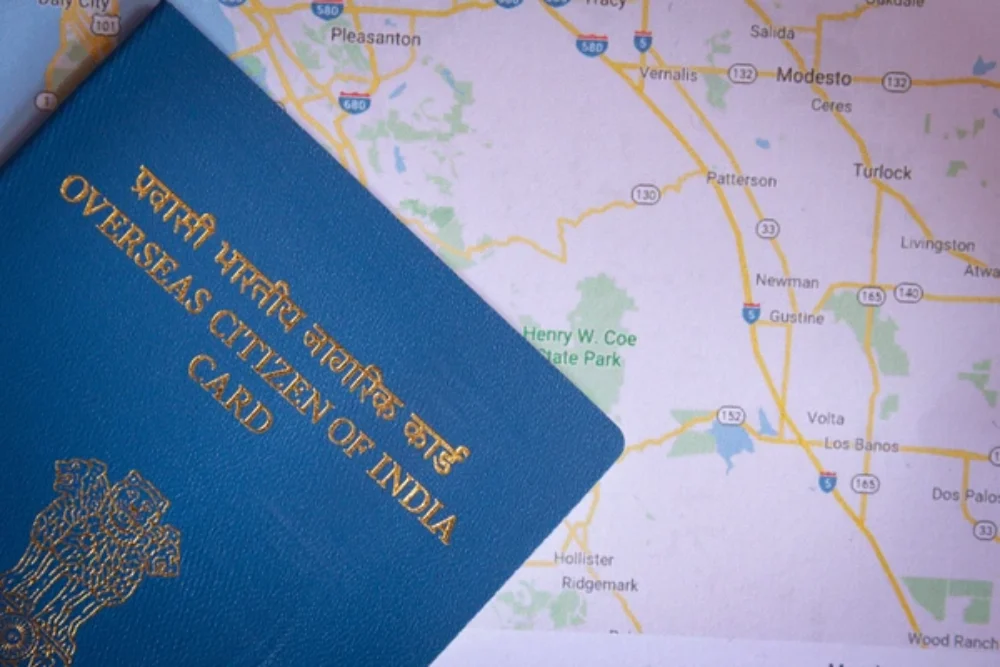
OCI card eligibility is one of the topics by people of Indian origin living abroad who want a long term legal connection with India. Many people hear terms like green card of India, overseas Indian citizen, or dual citizenship India and feel confused. This guide clears that confusion step by step and explains who qualifies, who does not, and what rules apply today.
The OCI card is not citizenship, but it gives lifelong access to India with multiple benefits. Understanding eligibility before applying saves time, money, and frustration.
What is oci and why people call it the green card of India?
The Overseas Citizen of India card is a permanent immigration status given to people of Indian origin who hold foreign citizenship. It allows visa free travel to India for life and removes the need for repeated visa applications.
Many people call it the green card of India because it offers long term stay, work rights, and entry privileges without being a citizen. India does not allow dual citizenship, so OCI became the practical alternative.
Who is eligible to apply for registration as OCI cardholder
OCI card eligibility depends mainly on Indian origin, past citizenship, or family connection. The government focuses on lineage rather than place of birth alone.
Under current rules, a person may apply if they or their parents or grandparents were Indian citizens at the time of Independence or later, provided they now hold foreign nationality.
OCI eligibility criteria
OCI card eligibility follows these core conditions that applicants should check carefully before applying.
- Person was an Indian citizen on or after 26 January 1950
- Person belonged to a territory that became part of India after 15 August 1947
- Person is a child or grandchild of an Indian citizen
- Person is a spouse of an Indian citizen or OCI cardholder with marriage registered for at least two years
These rules form the base of OCI card eligibility and are strictly verified.
Who can apply for OCI card by nationality and status
Many applicants ask whether nationality affects OCI card eligibility. The answer is yes.
Eligible foreign nationals include citizens of countries like the United States, United Kingdom, Canada, Australia, and European nations. British overseas citizen status alone does not always qualify unless Indian origin is proven.
Applicants from Pakistan or Bangladesh origin are not eligible even if they later obtained foreign nationality.
OCI card requirements documents that are commonly needed
OCI card eligibility must be supported by documents. Missing or incorrect paperwork leads to rejection or delay.
- Current foreign passport
- Proof of Indian origin such as old Indian passport or birth certificate
- Parents or grandparents Indian citizenship proof
- Marriage certificate if applying as spouse
- Recent photographs and signatures
Meeting documentation standards is a core part of OCI card eligibility verification.
Indian origin card vs OCI card what changed
Earlier, the Indian origin card existed as a separate category. It has now been merged into the OCI system. Anyone holding an old Indian origin card must convert it to OCI. This change simplified long term residency rules and strengthened OCI card eligibility consistency across applicants.

Overseas Indian citizen application process step by step
The application process is fully online followed by in person verification.
- Online form submission
- Uploading documents
- Appointment at Indian mission or outsourced center
- Biometric verification
- Status tracking until approval
OCI card holders new rules everyone should know
OCI card eligibility rules have evolved in recent years. OCI holders must now follow Indian laws related to research, journalism, and missionary activities.
Special permissions are required for protected or restricted areas. Employment in certain government related roles is not allowed.
OCI holders are also required to update passport details after renewal, especially for minors and first time adult renewals.
What are the benefits of OCI card for families and professionals
People meeting OCI card eligibility gain several long term benefits.
- Lifelong multiple entry visa free travel
- Right to live and work in India
- Access to education and property except agricultural land
- Parity with NRIs in economic and educational fields
These benefits make OCI highly valuable for global Indians.
OCI eligibility for children and minors
Children born abroad to eligible parents can apply if at least one parent meets OCI card eligibility.
Both parents’ consent is required. For adopted children, additional legal documents are reviewed carefully.
Once granted, OCI remains valid for life with periodic passport updates.
OCI requirements India compared to visa options
Compared to tourist or employment visas, OCI card eligibility offers far greater flexibility.
| Feature | OCI Card | Tourist Visa |
| Validity | Lifetime | Limited |
| Work rights | Yes | No |
| Entry limit | Multiple | Restricted |
| Renewal | Not required | Frequent |
This comparison helps applicants choose the right path.
Common reasons oci applications get rejected
Even when OCI card eligibility seems clear, applications may be rejected due to errors.
- Incomplete documents
- Mismatch in names or dates
- Unclear proof of Indian origin
- Applying under ineligible country origin
Conclusion:
Following instructions carefully improves OCI card eligibility approval chances and avoids resubmission. Double checking details before submission prevents issues. Processing times vary by country but usually range from four to eight weeks depending on verification and document accuracy.
Frequently Asked Questions
Who qualifies under OCI card eligibility today?
OCI card eligibility applies to foreign nationals of Indian origin or their children or spouses if legal proof exists. The applicant must not have roots linked to restricted countries under Indian law.
Is OCI the same as dual citizenship in India?
India does not allow dual citizenship. OCI is not citizenship. It is a permanent residency style status that provides long term rights without voting or political privileges.
Can British overseas citizens apply for OCI?
A British overseas citizen can apply only if Indian origin is proven through parents or grandparents. Citizenship status alone does not guarantee OCI approval.
What documents prove Indian origin for OCI?
Documents include old Indian passports, domicile certificates, birth certificates of parents, or government issued nationality records showing Indian citizenship history.
Does marriage guarantee OCI eligibility?
Marriage alone does not guarantee approval. The marriage must be registered and completed for at least two years, and the spouse must already meet OCI conditions.
Can OCI cards be cancelled later?
Yes, OCI can be cancelled if laws are violated, documents were false, or national security rules are breached. Compliance with Indian regulations is mandatory.
Is there an age limit for applying OCi?
There is no age limit. Minors, adults, and seniors can apply as long as eligibility conditions and documentation are fulfilled correctly.
Can OCI card holders work in India?
Yes, OCI holders can work in private sectors and run businesses but cannot hold government jobs or constitutional positions.
Is OCI better than a long term visa?
OCI offers lifetime access, work rights, and no renewal stress, making it far more practical than repeatedly applying for long term visas.