
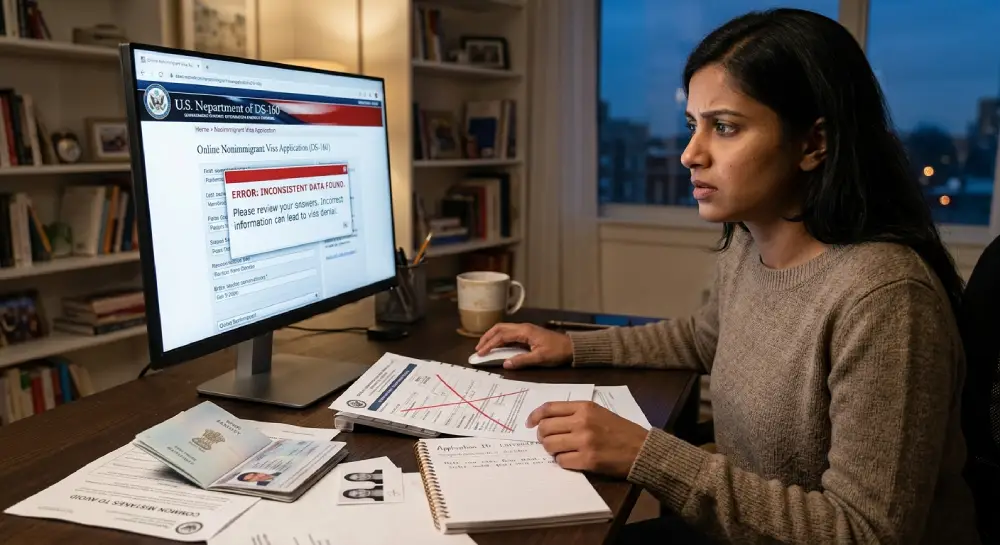
Filling out the DS-160 is stressful. One wrong answer and the whole thing can fall apart. The application gets submitted, the interview gets scheduled, and then the consular officer finds a mistake. The visa gets denied. The fees are lost. The trip gets cancelled.
Here is the thing. Most DS-160 mistakes are completely avoidable. Knowing what to watch for makes all the difference.
What Is Form DS-160
Form DS is the Online Nonimmigrant Visa Application process . It is used for temporary U.S. visas like B-1 visa business, B-2 visa tourism, F-1 visa student, J-1 visa exchange, and H-1B work visas . The form is completed online through the Department of State CEAC portal. No paper versions are accepted.
The DS-160 collects biographic details, passport information, travel plans, employment history, and security questions . Once submitted, it cannot be edited online .
How to Access and Complete?
Start by going to the CEAC website. Select the embassy or consulate location. Choose “Start a New Application” . An Application ID gets generated immediately. Write it down. Also save the security question answer.
The form has many sections. Work through each one. Save frequently. The system times out after 20 minutes of inactivity . All questions must be answered. Write “none” if nothing applies .
After answering everything, upload a digital photo. The photo must meet strict U.S. Department of State requirements. Then review carefully. Once submitted, corrections are not possible .
The Confirmation Page Is Critical
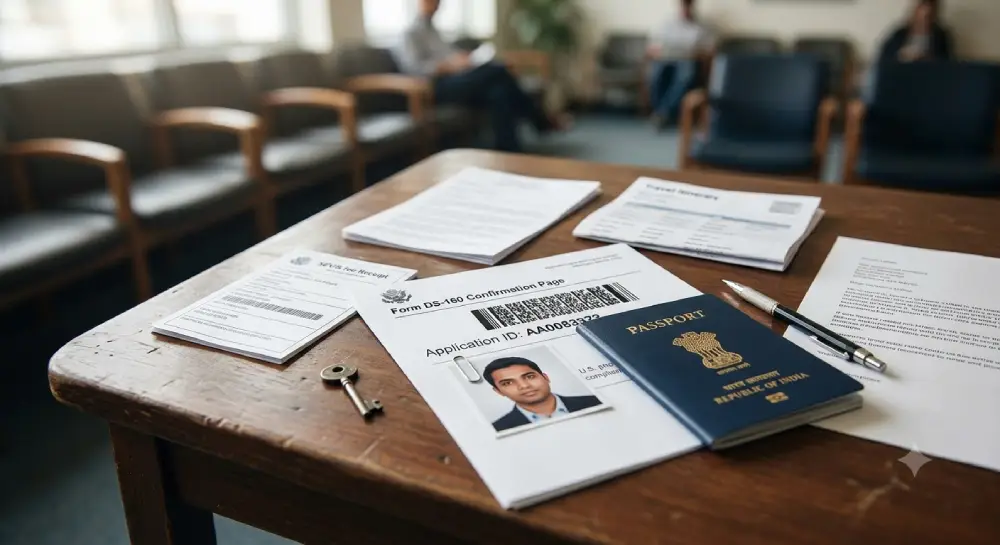
After submission, a confirmation page with a barcode appears . Print it. Bring it to the interview. This page proves the application was finalized .
The confirmation number on this page must match exactly the number used to schedule the interview appointment . If the numbers do not match, the appointment gets cancelled . Common typos include confusing O with 0 and V with U .
Check this at least three business days before the interview . Many applicants have been turned away at the embassy door for this simple mistake.
Common Mistakes That Derail Applications
The biggest errors are avoidable. Here is what to watch for.
- Name mismatches: The name must match the passport exactly. Even one letter off can cause problems . Double check every time.
- Wrong visa category:Selecting the wrong classification leads to delays or denials . Know which visa is needed before starting.
- Inconsistent employment history: Gaps in work history raise red flags . Explain any gaps in the additional information section.
- Missing past visa refusals: The system knows about prior refusals. Not disclosing them is a major problem . Be honest. Explain the circumstances.
- Incomplete application: The form is only finalized after clicking “Sign and Submit” . The confirmation page with the barcode proves completion. Without it, the application does not exist in the system .
Documents Needed Before Starting
Gather everything before beginning. This saves time and reduces stress. Required items include:
– Passport with at least six months validity beyond the intended stay
– Digital photo meeting U.S. standards
– Travel itinerary if available
– Previous U.S. travel dates
– Employment and education history
– Social media handles used in the last five years
For students, have the SEVIS ID from Form I-20 or DS-2019 ready . For petition-based visas, keep the I-129 approval notice nearby .
Supporting Documents for the Interview
The DS-160 is just the application. Supporting documents must be brought to the interview . Required documents include:
- DS-160 confirmation page with barcode
- Valid passport
- Photo meeting specifications
- Visa fee payment receipt
Additional documents may be requested depending on the visa category. These can include financial statements, employment letters, or proof of ties to the home country .
Photo Requirements
U.S. visa application photos have strict rules. The photo must be:
- 2 x 2 inches (5 x 5 cm)
- Color, with white background
- Taken within the last six months
- Without eyeglasses
- Showing full face with ears visible
It may accept a photo even if it does not meet requirements. That does not mean the photo is acceptable. Bring a physical copy to the interview just in case .
What Happens After Submission
After submission, pay the visa fee . Then schedule the interview appointment . At the interview, a consular officer reviews the application and asks questions . Inconsistent or inaccurate answers make approval harder .
If approved, the passport with the visa stamp is returned within several business days . If refused, the passport is returned with a letter explaining the reason .
Conclusion
The DS-160 is the starting point for any U.S. nonimmigrant visa application. Mistakes are costly. Visa application fees get lost. Time gets wasted. Appointments get cancelled.
Taking the time to fill out the form carefully pays off. Double check every entry. Match the confirmation number to the appointment. Bring the right documents to the interview. Following these steps gives the best chance of approval.
Frequently Asked Questions
What is Form DS-160 used for?
It is the online application for U.S. nonimmigrant visas including tourist, business, student, and work visas. It collects information for consular officers to determine visa eligibility.
Can I edit my DS-160 after submitting it?
No. Once submitted, it cannot be edited online. If a correction is needed, complete a new DS-160 and bring both confirmation pages to the interview.
What happens if the confirmation number does not match my appointment?
The appointment will be cancelled. Check the number at least three business days before the interview. If they do not match, update the appointment account with the correct number.
How long does it take to complete?
The U.S. government estimates about 90 minutes. Gathering documents in advance saves time. Save regularly to avoid losing work.
Is there a fee for the DS-160 form itself?
No. it has no separate filing fee. However, a visa processing fee must be paid before the interview. The amount depends on the visa category.
What documents do I need for?
A valid passport, digital photo, travel itinerary, previous U.S. travel dates, employment history, education history, and social media handles used in the last five years.
Can someone else fill out or me?
Yes, but the applicant must electronically sign the application themselves. The final submission requires the applicant’s own action.
What happens if I forget my Application ID?
The Application ID can be retrieved using the security question and answer set at the start. Write both down before leaving the page.
Do children need their own?
Yes. Every applicant, including children, must have their own DS-160. A parent or guardian can help complete it.
What is the difference between DS-160 and DS-260?
DS-160 is for nonimmigrant temporary visas. DS-260 is for immigrant visas and green cards processed through a U.S. embassy or consulate.